What Does a Therapy Session Look Like?
If you’re new to therapy, let me be the first to say welcome! I’m proud of you for taking this step! It’s not easy to make the decision to ask for help, especially if what you’re struggling with his how you feel, how you think, and/or how you behave.
Seeing a therapist can be pretty scary, especially if you’re not sure what to expect during a therapy session.
I’m not going to be able to answer or explore every nuance that comes with how each individual therapist runs their sessions, so I’m going to talk about my sessions in particular, and some other ways clinicians might approach their sessions.
Every therapist is different. There’s no problem with “shopping around” and talking to different therapists to see if they might be a good fit for you. Most therapists will offer a 15-minute consultation call so you can talk to them about your concerns and get a feel for if they’re the right fit for you or not.
15 minutes isn’t always enough time but it can give you a general feeling. It’s important to remember that if the therapist isn’t a good fit for you, you can stop seeing them, and find someone who may be a better fit!
We can talk about license types at another time but for the purpose of this post, I’m going to talk a little about how therapy sessions work.
I can talk about my process and what I do in sessions and to know that not everyone is like this. Some therapists are more structured, some aren’t, some are more flexible. It depends.
Before our first session, I’ve talked to the potential client first on a 15 minute consultation phone call. We’ve decided we’re probably a good fit and we’ve scheduled our initial session.
My first meeting with a client is a biopsychosocial, or an intake. This is a structured interview where I ask the client more in-depth questions about them, their history, and more specifics about why they’re coming to therapy.
As a clinician who likes data, collecting as much information as I can on a client makes a big difference for me in understanding the “bigger picture” of a client’s life. It usually gives me a good idea of areas of focus in therapy and a better understanding of my client in the context of their lives.
A biopsychosocial is fairly formal (I keep mine light!) but it’s not always common. Many therapists will have initial sessions that are more conversational or may focus specifically on what goals a client would like to accomplish in therapy.
In subsequent sessions, I’m very conversational with my clients. I ask them how they’re doing, if there’s anything they’re bringing to session today that they would like to discuss. I love that my clients keep hydrated during my sessions, sometimes having a snack. I keep my sessions fairly informal, depending on what we’re covering.
I keep the floor open for whatever the client would like to discuss, unless we have topics already laid out, then I may offer a suggestion.
Most of my sessions are very conversational. I’m talking to clients about their concerns, pointing out patterns of behavior or thinking that may be unhelpful, reminding them about coping skills, or that they’ve managed similar situations in the past and did well with them.
I validate my clients but I’m not a pandering kind of therapist. I’ll point things out or challenge my client on things.
Some therapists are softer, some are more tough love.
I’m always amused when I use “how does that make you feel?” in session because it’s a good question but the thing that people always think about when it comes to therapy. I don’t ask it very often because there are other ways to explore how we feel or for someone to identify what they’re experiencing.
Unless a therapist is strict psychodynamic (Freudian psychology, a topic for another article) my clients aren’t laying down on a couch.
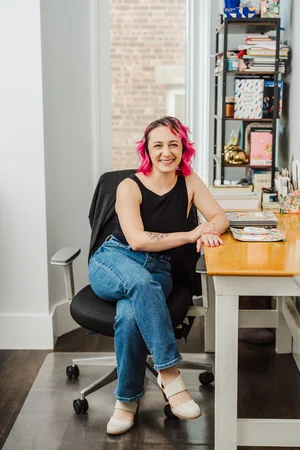
We’re sitting together, on a virtual call, talking like two regular people would talk. I laugh a lot with my clients, I swear. We talk about art and music and media that speaks to them or bothers them.
The rapport built between a therapist and client is one of the most powerful tools of therapy and my style is very much about being warm, approachable, and making you feel comfortable in speaking with me.
I want my clients to feel like we can sit and chat over coffee. It’s a professional relationship but it’s also relational.
It’s important to think about what it is you’re looking for in a therapist and their approach. Do you want more structure? Homework? Something looser and more relaxed? There’s no right or wrong answer, it’s just what works best for you!